What a Slow Therapist Website Is Actually Costing You

Most therapists think of site speed as a technical issue — something their web developer should "sort out" in the background. Something that matters to Google but not to real people.
That assumption is costing you bookings.
Here is what the data actually shows, and what it means for a therapy practice.
The numbers most therapists have not seen
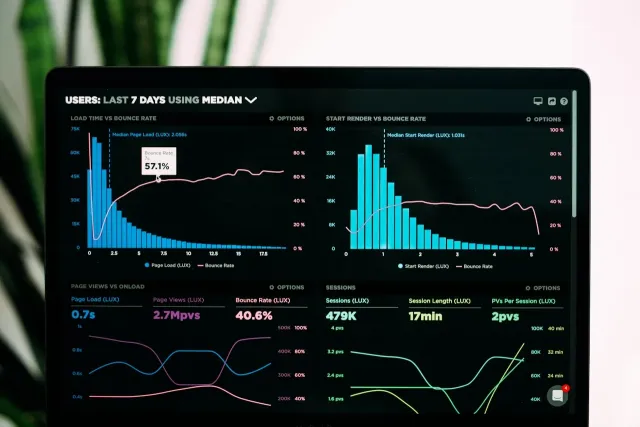
Google's own research shows that as page load time increases from 1 second to 3 seconds, the probability of a mobile visitor bouncing increases by 32%.
From 1 second to 5 seconds: 90% increase in bounce probability.
From 1 second to 10 seconds: 123% increase.
The typical Squarespace therapist site loads in 3–5 seconds on mobile. That means, conservatively, a third of your mobile visitors leave before seeing a word of your copy, a single image of your space, or any reason to book.
They do not wait. They go back to Google and click the next result.
Why it hits therapists harder than most
Therapy clients are often searching in a heightened emotional state. They have decided — or nearly decided — to reach out for help. That decision required courage. The moment they land on your site, they are asking one question: "Is this safe enough to take the next step?"
A slow site adds friction at exactly this moment. It introduces doubt. Is this practitioner professional? Is this practice properly set up? The site is the first indicator.
A fast, well-built site communicates the opposite: this practitioner takes details seriously. That signal matters more in mental health than in almost any other service category.
How to measure what speed is costing you
Here is a rough calculation for a therapy practice:
- Open Google Analytics (or whatever tool you use) and find your monthly unique visitors.
- Find your current contact form submission rate (enquiries / visitors).
- Find your consultation-to-booking conversion rate.
- Multiply out to find your monthly new bookings from the website.
Now apply the Google benchmark: if your site loads in 4 seconds and improving it to under 1 second reduces bounce rate by approximately 50%, what does that do to step 2?
If you are currently converting 200 monthly visitors at 3%, that is 6 enquiries per month. A 50% improvement in bounce rate is not a 50% improvement in conversions — some of the bounce improvement comes from people who were never going to enquire. A conservative assumption: 25% improvement in enquiries. That is 1.5 additional enquiries per month.
At a typical therapy client lifetime value of $2,000–$6,000, that 1.5 additional monthly enquiries — conservatively at 50% conversion to booking — is $1,500–$4,500 of additional annual revenue from site speed alone.
The numbers compound. They compound every year you stay on a slow platform.
What makes a therapist site slow?
The most common culprits:
Platform overhead. Squarespace, Wix, and WordPress load significant JavaScript and CSS that your site does not use. You pay this performance cost whether you use those features or not.
Unoptimised images. Full-resolution photographs served to mobile devices. A 4MB hero image loads significantly slower than a properly compressed WebP at 80KB.
Third-party scripts. Analytics tags, booking widgets, chat tools, social embeds. Each one adds load time. Each one has to be evaluated for whether the value justifies the cost.
No caching or CDN. A site that delivers the same files from the same server every time is slower than one that caches static assets at the edge.
Render-blocking resources. CSS and JavaScript that prevents the browser from displaying anything until it finishes loading. Visible as a white screen before the site appears.
What a fast therapist site looks like
The benchmark is a Google PageSpeed Insights score of 90+ on mobile — not 65, not 73. A score of 90+ means:
- Largest Contentful Paint (LCP) under 2.5 seconds — ideally under 1 second
- First Input Delay (FID) under 100ms
- Cumulative Layout Shift (CLS) under 0.1
Sites built with custom code, properly optimised images, minimal third-party dependencies, and a CDN regularly hit these marks. Template-platform sites, in our experience, almost never do on mobile without significant workarounds.
The fix
If you are on a template platform, the options are:
-
Optimise within the platform. Compress images, remove unused third-party scripts, disable unnecessary features. This will improve your score somewhat. It will not reach 90+ on mobile in most cases.
-
Move to a faster platform. Webflow and Framer can, with careful implementation, hit higher scores than Squarespace. They are not as fast as custom code, but they are meaningfully better.
-
Build custom. Custom code, built with performance as a first-order requirement from day one, is the only reliable path to sub-second mobile load times. This is an investment — not a monthly expense, but a one-time build that compounds over time.
The question to ask yourself
Every month you spend on a slow site is a month of bookings lost to a competitor whose site loads faster. Not because they are a better therapist. Not because their copy is sharper or their methodology is more effective. Simply because their site was built to be fast.
Is that an acceptable reason to lose a client?
GladeForm builds custom-coded therapy websites with sub-second load times built in from day one. See our therapist website design overview → or read the Calmy case study →.

Founder & Lead Engineer, GladeForm
Palash builds high-converting digital environments exclusively for wellness practitioners. Before GladeForm, he spent years engineering digital products across industries — and kept returning to the same problem: the gap between how talented a practitioner was and how they appeared online. Learn more →