The Archive.
Proof of execution. A selection of digital instruments engineered for the wellness sector.
Calmy
The Diagnostic
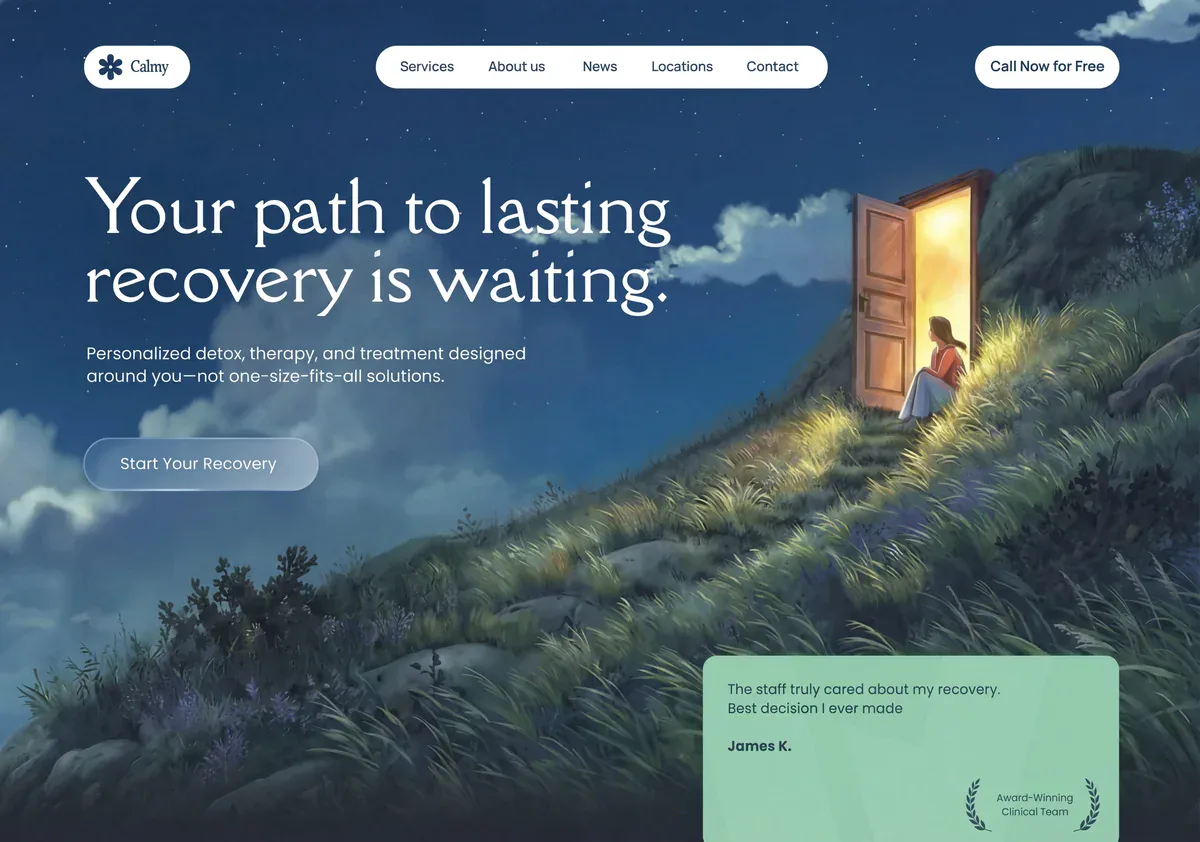
Calmy came to us at an inflection point. Their clinical outcomes were exceptional — a 78% long-term recovery rate — but their website was generic, cold, and institutional. The typical person exploring recovery options is in crisis or close to it. Scared, overwhelmed, searching from a place of deep vulnerability. Calmy's old site read like a bureaucratic checkpoint rather than a compassionate doorway. The authority was there. The warmth wasn't. They were losing prospective patients at the homepage before a single word of their genuine philosophy had been read.
The Architecture
We rebuilt Calmy's digital presence around one core insight: the decision to seek treatment happens emotionally, not logically. We designed a warm, narrative-driven experience with immersive natural imagery, motion that breathed rather than rushed, and copy that acknowledged the difficulty of the moment before it described any service. The intake flow was stripped to its essentials — a name, a number, a single question. Real patient testimonials were surfaced prominently and early. The result was a site that felt like the first step of recovery itself: calming, specific, and deeply human.
Elvyn
The Diagnostic
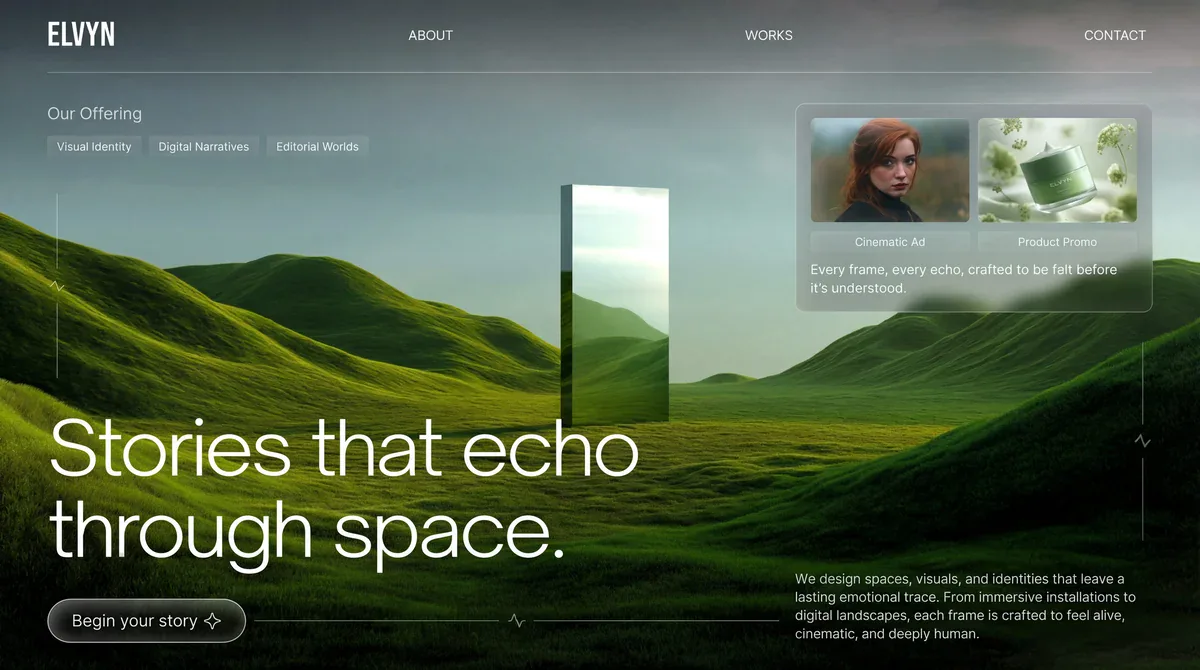
Elvyn builds visual identities and immersive digital narratives for cultural brands — the kind of work that earns feature placement in design publications and wins creative awards. But their own website was a contradiction: a standard portfolio grid that undersold their capability at every scroll. They were pitching cinematic spatial experience to clients, then linking them to something that felt like every other creative agency's template. The mismatch was commercial. Inbound enquiries were low-quality, clients were anchoring price expectations based on the visual impression, and the studio's true market position wasn't being communicated at all.
The Architecture
We designed what we called a Midnight Luxe environment — severe, confident, and cinematic. The palette was stripped to near-monochrome with moments of deliberate contrast. Navigation dissolved on scroll. Section transitions used custom physics-based easing that mimicked the pacing of a film cut. A horizontal scroll on the portfolio section broke the vertical expectation and forced genuine engagement. Copy was reduced to its absolute minimum: a few statements with the weight of headlines. The result was a website that didn't describe Elvyn's work — it embodied it.
Mindloop
The Diagnostic
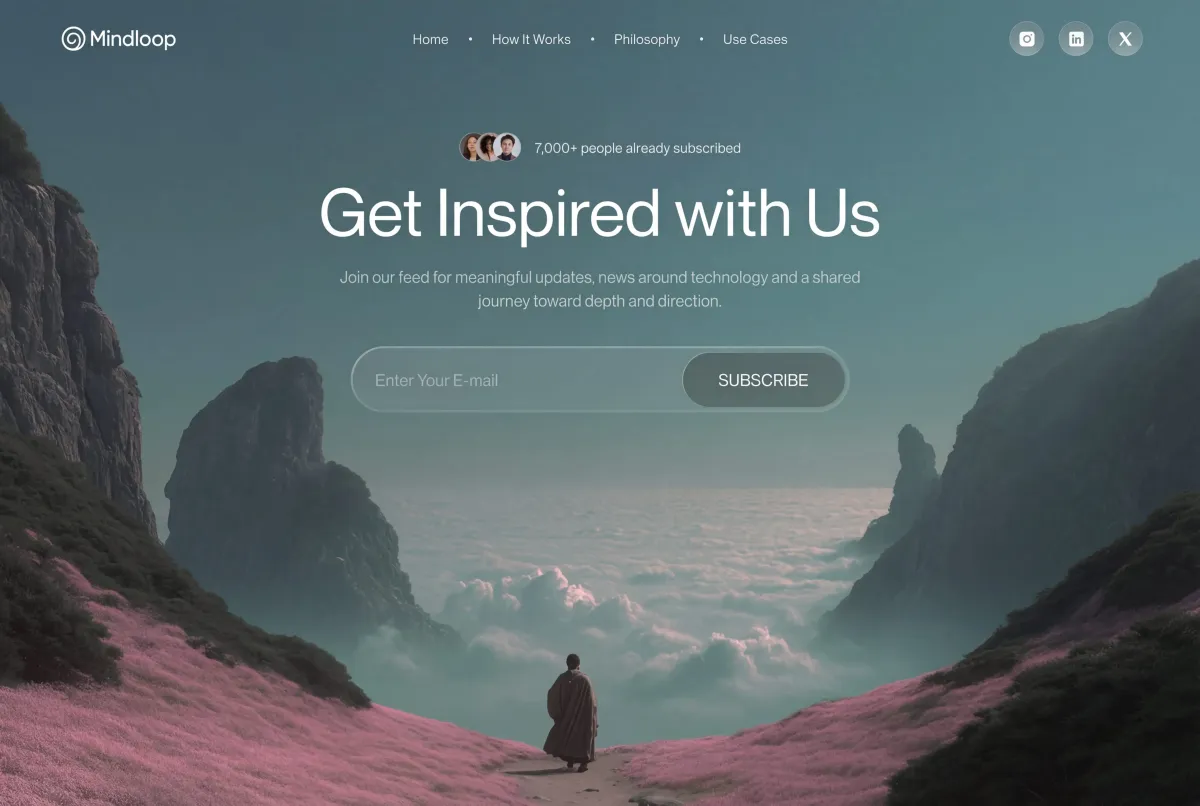
Mindloop had built genuine authority in the tech newsletter space — sharp analysis, a dedicated readership, a distinctive editorial voice. But growth had plateaued. The underlying problem wasn't the content — it was the conversion architecture. Their landing page was a generic subscribe form with no emotional hook, no social proof, and no sense of what made Mindloop worth the email address. In a space where inbox competition is fierce and attention is zero-sum, a frictionless generic opt-in was losing them 60–70% of visitors who arrived with genuine curiosity.
The Architecture
We applied what we call the Organic Tech framework: a landing experience that feels simultaneously warm and sophisticated, with an editorial-quality hero that captured Mindloop's voice rather than just described it. The first fold was redesigned around a single emotional proposition — the feeling of intellectual direction in a world of noise — rather than a feature list. Pull quotes from archived issues served as ambient social proof. The subscription form was reduced to a single field. By the time readers reached it, they were already convinced.